A research one-pager with sources
Ask a question and get back one page with a recommendation and the sources behind it.
Your bots can search the web and read what comes back. In this tutorial you get a one-page answer to a real question, with its sources, either from one bot or from a small research team.
Before you start
- A working engine. Web search works out of the box with a free search service. Flux Router adds a search that returns a written answer with its sources.
- Optional: your own Tavily, Exa or Firecrawl key under Settings → Tools & Connections.
1. Ask one bot
For a quick answer, message your Chief of Staff:
Look into whether we should move our billing to Stripe.
One page: a recommendation, the three reasons behind it,
and the source for each claim. List what you couldn't confirm.
Asking for sources and for what it couldn't confirm matters. Bots don't attach sources to every answer unless you ask.
2. Or put a team on it
For a bigger question, ask your Chief to staff it, and to show you the plan first:
Put a research team on this and show me who you'd put on it
before anyone starts: should we sell to dental practices?
Who would we be up against, and what do they charge?
One page, with sources.
Your Chief proposes a lead and a few specialists, each with one part of the question. Nothing starts until you say go. Reply with any missing context, then tell it to start.
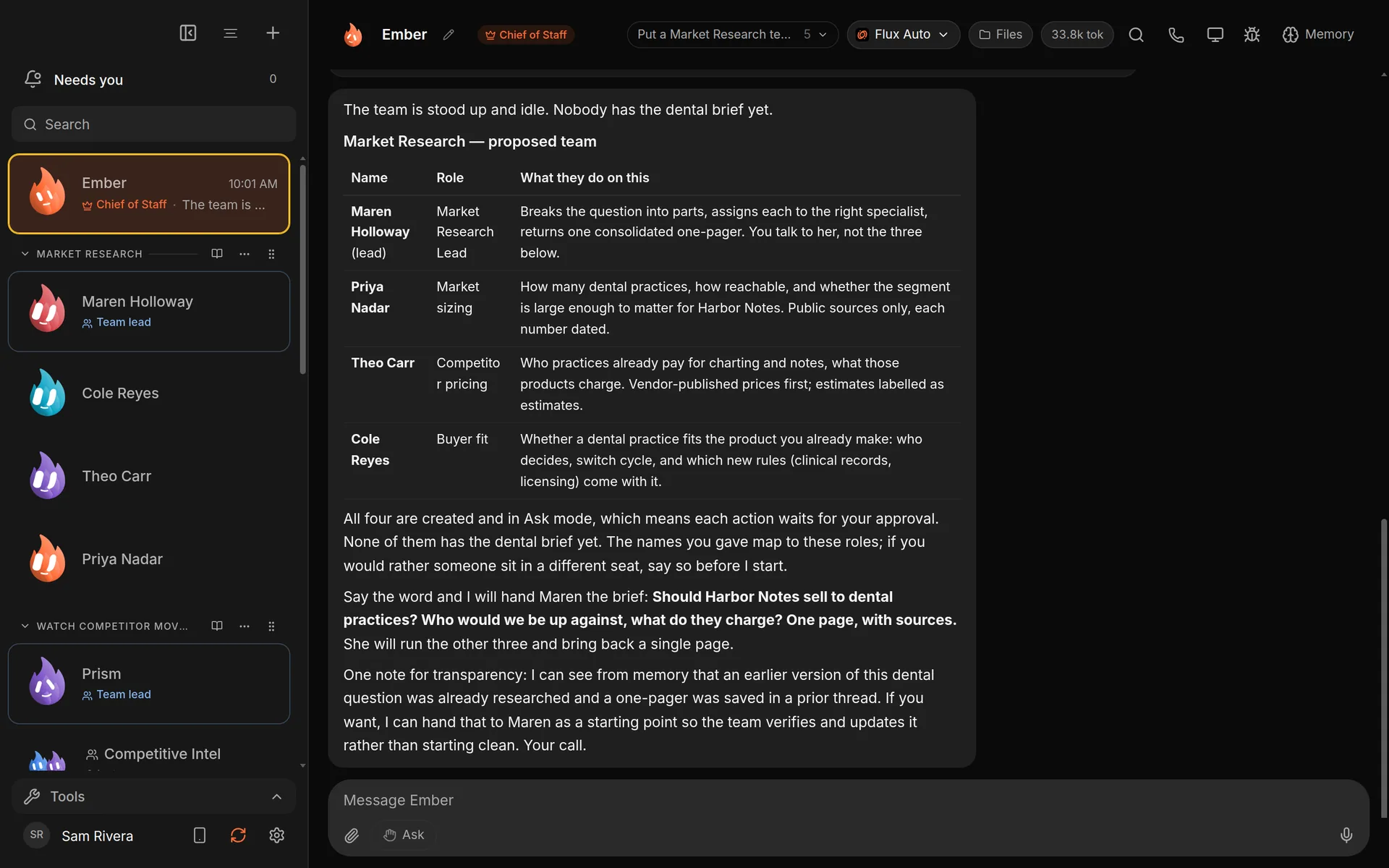
Your Chief of Staff (it starts as Ember; you can rename it) proposes a research team and waits for your go.
3. Read the one-pager
The lead combines the team's work into one page and saves it as a file. It appears in the chat, and you can open it from Files.
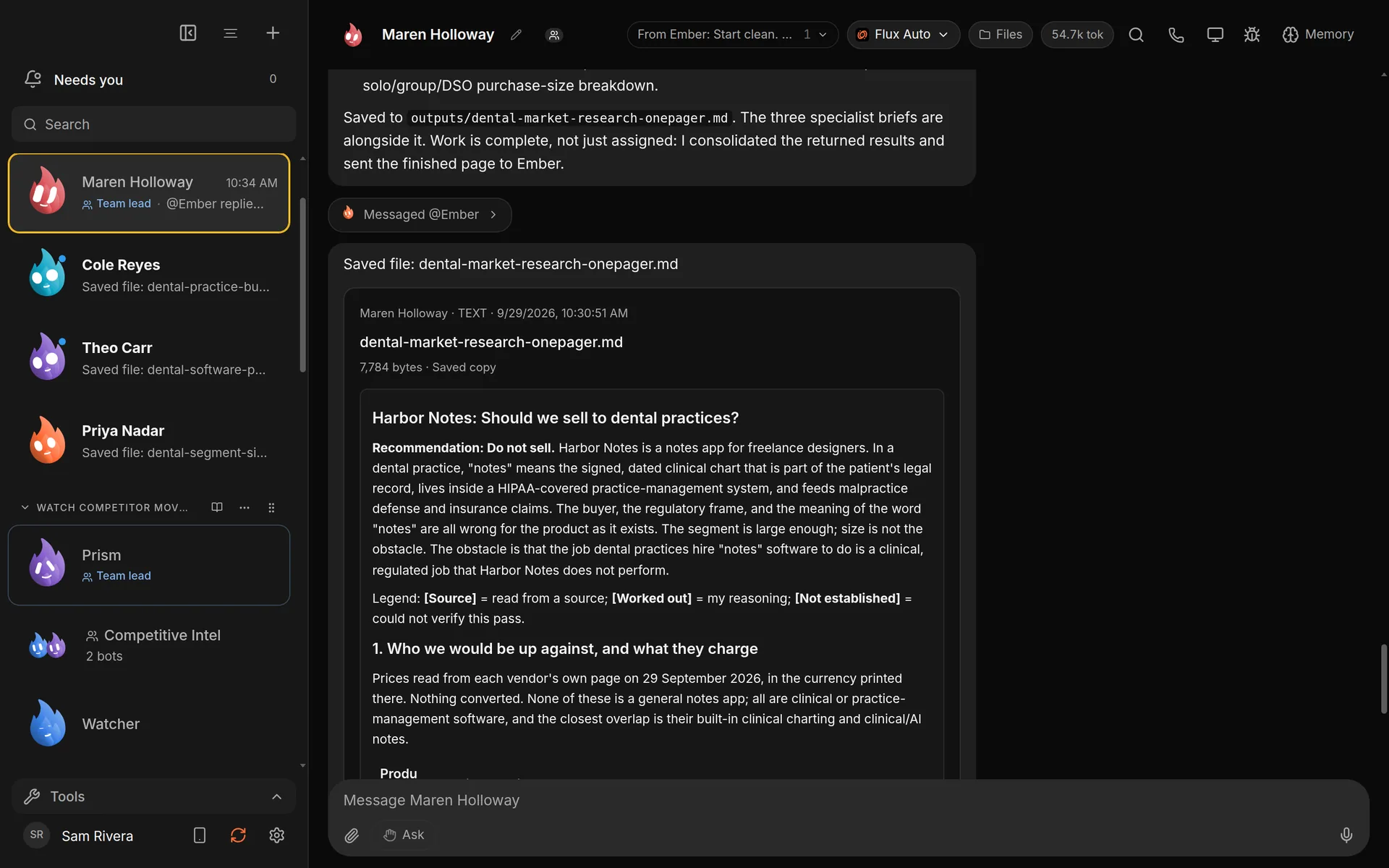
The team lead's finished one-pager, with its sources linked. Demo workspace. Your Chief of Staff starts as Ember; you can rename it.
4. Check it
Open two or three sources yourself before you act on the answer. Ask follow-ups in the same chat, such as "What would change your recommendation?"
What you get
One page with a clear recommendation, the reasons, links to where each claim came from, and an honest list of gaps.
See the use case: Research.